No-Start Diagnostics in Hinesville, GA
The call
Say what it does: one click, machine-gun clicking, cranks-but-won't-fire, or stone dead. That one sentence usually narrows it to two suspects and sets the right tools on the truck.
The visit
Charge state, cranking draw, voltage drop across every connection, then fuel and spark if it cranks clean — the evidence order that ends parts-guessing. You get the cause named, in writing.
The cost
Diagnosis $90–$130, usually credited into a same-visit repair. Typical follow-on fixes: battery $150–$280 installed, starter $280–$550, alternator $350–$650, a cleaned ground strap sometimes $0.
The 0500 no-start: this market's signature emergency
Nobody discovers a dead car at a convenient hour in this county — they discover it in the dark, with a formation or a shift on the other side of it. That's why the earliest calls get the earliest slots, and why the single best thing you can do costs nothing: stop cranking. A battery with charge left makes every diagnosis faster and every fix cheaper; a battery cranked flat turns a ten-minute connection repair into a two-part morning. Call first, crank never.
What no-starts actually turn out to be here
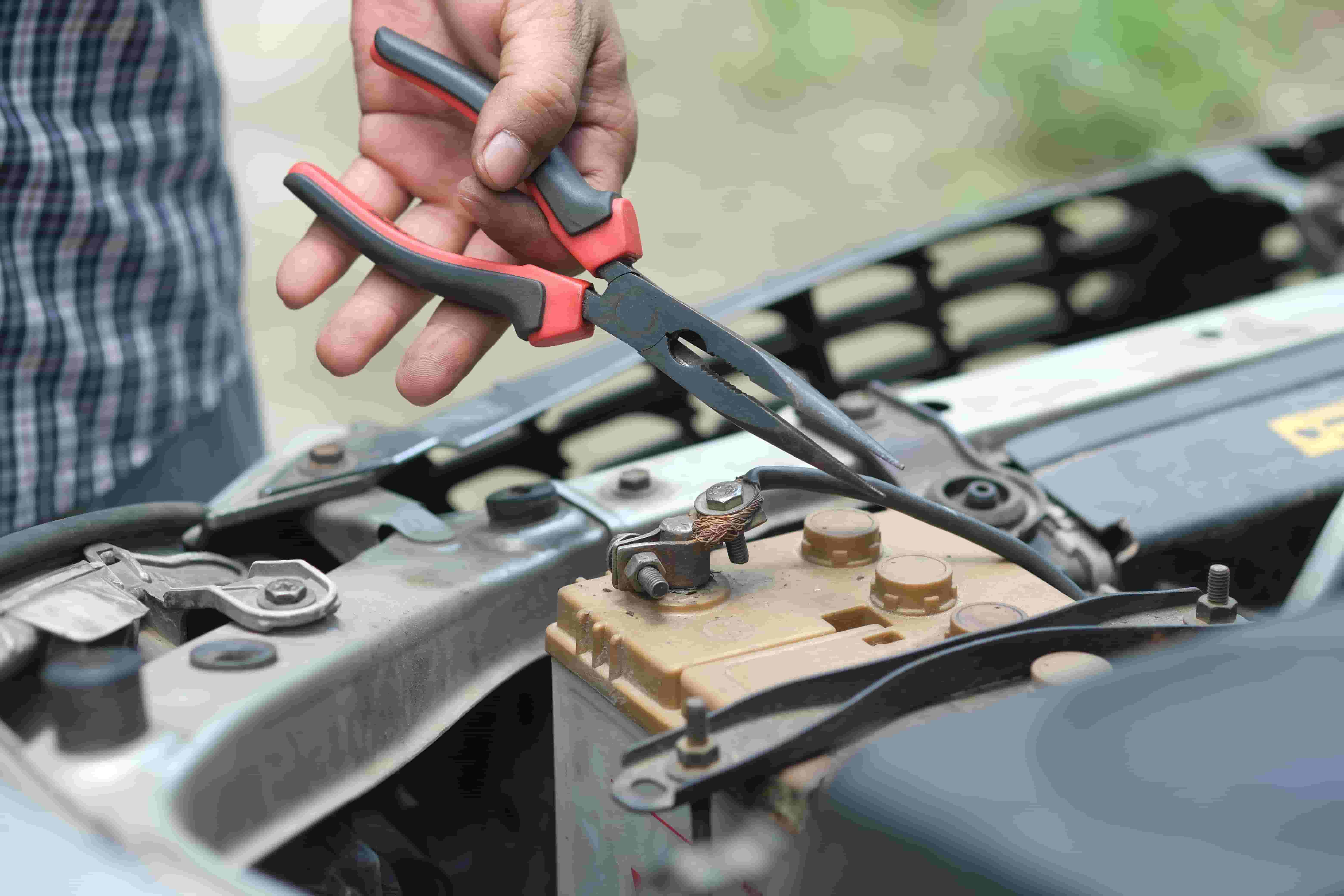
Coastal Georgia is battery country — sustained heat and humidity age batteries faster than northern cold ever does, and three-year-old batteries dying without warning is the local norm, not the exception. After batteries: corroded terminals and ground straps (the humid-air specialty, often a trivially cheap fix), starters on high-mileage vehicles, and the occasional immobilizer fault that looks terrifying and isn't. The point of testing in evidence order is that all of these announce themselves differently to a meter — and identically to a guess.
If the verdict is the charging-and-starting trio, parts are sourced locally and installed the same visit. Died somewhere other than home? That's on-site breakdown repair — same tests, different parking lot. And if the no-start belongs to a car you were about to buy: congratulations on the free inspection result; walk away.
Frequently asked questions
It clicks once. Battery or starter?
Could be either — or a connection imitating both, which is the humid-climate special. The voltage-drop test tells them apart in minutes, which is exactly why testing precedes buying.
It starts with a jump but dies while driving. What is that?
The alternator, almost always — a battery alone can't run a car for long. Both get tested in one visit and only the guilty part gets replaced.
Can you diagnose in an apartment lot before sunrise?
Yes — early apartment-lot calls along the gate-side corridor are the most common job in this market. Keep your phone's flashlight handy and the keys closer.
What if it's not fixable in the driveway?
Then you'll know precisely what it is before paying for a tow — and the tow goes once, to the right shop, with the diagnosis in hand. That knowledge is worth the visit fee by itself.